BORE: A Co-op Survival Horror Game About Crewing a Giant Drill
November 7, 2026
Indie Game Publishers: How to Pitch One and What to Check Before You Sign
A publishing deal trades a share of your revenue, and sometimes some of your rights, for money and work you would otherwise do yourself. To get one, send each publisher exactly what its own pitch page asks for. Before you sign, read five clauses closely: the revenue split, recoupment, IP, the term and the marketing commitment. The one large public data set on these terms we know of is Voyer Law’s review of more than 100 developer and publisher agreements signed from 2017 to 2025, and we quote it below as data, not as a standard.
What publishers ask for in a pitch
Publishers say what they want on their own pages, and the lists are short. Two examples:
- Raw Fury asks for a playable PC build that captures the essence of the game, a development budget for one PC build in US dollars (marketing is worked out later with them), and a deck that answers what you are making, why, who you are, where you want to go, what you need and when you will get there. GIFs, video, a design document and concept art are welcome extras. The page dates from December 2024.
- tinyBuild takes pitches by email at [email protected] and asks for a GIF under 2 MB in the body, a plain YouTube link where the interesting part is visible within five seconds, short bullet points, an easy-to-play build sent as a Dropbox link, and, if you need funding, what it would be used for.
The rules we apply to all outreach hold here too: read the publisher’s own page before you write, use the channel it asks for, and never send two publishers the same email. A mass mail reads like one.
Who to pitch
Start from games, not from a list of publisher names. Find five to ten games on Steam that are close to yours in genre and scope, and look at who published them: the publisher’s name on each store page links to the rest of its catalogue. A publisher with three games like yours already knows the audience. One with none will learn it on your game. Events help too: the 2027 indie packages at Nordic Game in Malmö include its Publishers and Investors Day.

A pitch email, in order
- Subject: the game’s name, genre and the one-line hook
- First line: why this publisher, named from its catalogue
- A GIF of the core loop, and a trailer link that shows play in the first seconds
- Three bullet points: what makes it different, what exists today, your release target
- The ask: money, porting, marketing or all three, with a figure
- Links: a build that runs on the first try, and your press kit
Five clauses to check before you sign
The figures in this section come from Voyer Law’s analysis as reported by GameDev Reports in May 2025. GameDev Reports points out that almost no data like this is public, so treat it as a sample of real contracts, not as market rates.
1. The revenue split
In deals with an advance, the developer’s median share was 50%, with an average of 58.2% and a range from 2.5% to 90%. Without an advance, the median was 70%. In console-only deals it was 60%. A percentage means little until you know what it is a percentage of, so ask for the written definition of net revenue: which store fees, refunds, taxes and costs come off before the split.
2. Recoupment
The advance was recouped in 93.9% of the advance deals, and in 48.4% it was recouped before the developer saw any revenue share. The question is how. Ask whether the publisher recoups from all net revenue or only from its own share, which costs besides the advance are recoupable, whether those costs are capped, and whether costs on one game can be recouped from another.

A worked example, with made-up numbers
Same sales, three times the payout
Say a publisher pays a EUR 200,000 advance, the split is 50/50, and the game earns EUR 300,000 in net revenue.
- Recouped from all revenue first: the publisher keeps the first EUR 200,000, and the remaining EUR 100,000 is split. You receive EUR 50,000.
- Recouped from the publisher’s half only: you receive 50% from the first euro, EUR 150,000, while the publisher’s EUR 150,000 counts against the advance.
These numbers illustrate the mechanism. They are not a typical deal.
3. IP and sequels
Developers kept their IP in 96.4% of the advance deals, and in every no-advance and console deal in the sample. Sequel rights were more common: 63.49% of advance deals gave the publisher some right to a sequel, and 56.41% of those were exclusive. Read whether the contract licenses your game or assigns it, what counts as a derivative work, and what happens to the rights if the publisher breaches. If you plan to apply for EU money later, owning the rights matters there too: our article on indie game grants in Europe explains why the Creative Europe call requires them.
4. The term
85% of the contracts ran for a fixed term and 15% had no end date. The average term was 6.84 years with an advance and 4.18 years without one, and 49.2% renewed automatically. Ask for the rights to come back to you if the publisher stops selling the game or misses agreed dates, and check how either side can end the deal.
5. The marketing commitment
The Voyer figures we quote do not cover marketing, so here we only give our own advice. If marketing is the reason you are signing, get it written down: a minimum spend or a list of activities such as a trailer, events, press outreach and creator keys, plus who decides the release date. Pair it with reporting and audit rights, which appeared in 83.3% of the advance deals in the sample. Then have a lawyer who works on game contracts read the final draft.
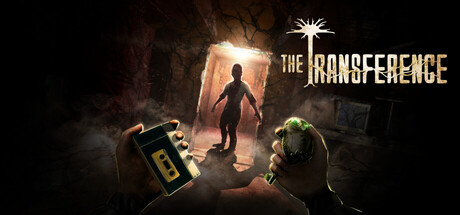
Each of these three games on IndiePump.space names a publisher on its Steam page, so you can see the developer and publisher credits side by side.
Games on IndiePump.space with a publisher
 Coming soon

 Demo available

How IndiePump can help with a publisher deal
Our distribution and collaborations service helps you build a publisher shortlist that fits your game, prepare the pitch and the build, and compare offers clause by clause. If you would rather keep your rights, our funding service looks at grants and other routes. Tell us where your game is today.

For developers
Put your game in front of 300+ content creators
Every game on IndiePump.space gets a free press kit page where streamers and writers request review keys, and you decide who gets one.

Follow IndiePump