
Legends of Rock: A Rock Band Management Sim That Starts You Broke
October 26, 2026
Steam Curator Connect: How to Send Copies That Get Played
October 28, 2026
Indie Game Grants in Europe: What Is Open for 2027 and When It Closes
The EU-wide grant for game development that is open right now is the Creative Europe MEDIA call for video games and immersive content: up to EUR 200,000 per project, with a deadline of 2 February 2027 at 17:00 Brussels time. It pays for the pre-production of narrative games, and only a studio that has already sold a game since 1 January 2024 can lead an application. Below is that call in detail, then the national schemes we could check on the funders’ own pages, each with its next date. Where a funder has not announced a date, we say so.
Creative Europe MEDIA: the 2027 video games call

CREA-MEDIA-2027-DEVVGIM at a glance
- Opened: 30 September 2026
- Deadline: 2 February 2027, 17:00 CET (Brussels), one stage only
- Budget: EUR 13,500,000 for the whole call, still subject to the EU’s 2027 budget being adopted
- Per project: up to EUR 200,000, paid as a lump sum at a 60% funding rate
- Results: July 2027, grant agreements in October 2027, projects normally up to 36 months
Sources: the call document, version 1.0 of 30 September 2026, and the topic page on the Funding and Tenders Portal, which lists the call as open.
Who can apply
- A legal entity established in a country that takes part fully in the MEDIA strand, owned mostly by nationals of those countries. Sole traders count. Private individuals otherwise do not.
- A company whose main activity is game development, XR or audiovisual production. Publishing companies are not eligible.
- The track record rule: the lead applicant must have produced or developed a game that was commercially distributed between 1 January 2024 and the deadline, and must show a sales report for that period. Work for hire does not count, and neither does a game still in Early Access.
- You can lead only one application across the four MEDIA development calls of 2027 (co-development, slate, mini-slate and video games).
What it pays for
The money covers concept development, from first idea to first prototype. Production is not eligible, and your production phase must start at least 10 months after the deadline. The game must be narrative, which the call defines as a story told through the whole game, not only in an intro or an ending. The call lists genres it will not fund even with a story attached: puzzle, memory, sports, racing, running, rhythm, social, quiz, party, versus fighting, word and number games. You must hold the majority of the rights, with a signed contract by the deadline.
Two details are easy to miss. Every applicant must register in the EU Participant Register before submitting. And one of the three mandatory work packages is financing, distribution and marketing, so a reviewer will read your marketing plan next to your game design.
National funds we checked
France: the CNC’s FAJV and the CIJV tax credit
The Fonds d’aide au jeu vidéo pays up to 50% of prototyping costs in its pre-production aid and up to 50% of production costs in its production aid, and the studio must keep at least 50% of the rights. It is for companies established in France that are not controlled by non-European capital; auto-entrepreneurs are excluded. The next filing dates are 18 January 2027, 27 April 2027 and 20 September 2027, with a committee about two months after each. The video game tax credit (CIJV) refunds 30% of development spending, up to EUR 6 million per company per year, for games that cost at least EUR 100,000.
Germany: Games-Förderung des Bundes
The federal research ministry’s second funding call funds prototypes and production. Projects must be at least EUR 300,000, the grant is capped at EUR 8 million, and the DLR project agency has to accept a draft of your application before you can file it. Complete applications are handled in the order they arrive, while budget lasts. Marketing costs are not eligible, except for trailers. The call is valid until a new one is published, and at the latest until 31 December 2026. The document does not say what follows it.
Denmark: NIMBI’s Spilordningen
Spilordningen spends DKK 15 million a year on the development, production and launch of Danish digital games. Development grants go up to DKK 100,000 for a concept or prototype, and above that for a demo. The applicant must work from a company based in Denmark, the EU, the EEA or Switzerland, you can apply in Danish or English, and production money requires a Danish language version. The next deadline is 21 January 2027 at 12:00.
Norway: the Norwegian Film Institute
The NFI’s game development grant covers up to 50% of development and launch costs. Applicants need a production company in Norway or the EEA, registered in the Norwegian business register, and the application must be in Norwegian unless an adviser agrees an exemption. The scheme page does not list the next deadline; the form opens four weeks before each one.
Greece: the Cash Rebate for digital games
On 24 April 2026 the Hellenic Film and Audiovisual Center (EKKOMED) set aside EUR 2,000,000 for digital games and said the instrument would be activated shortly. We found no opening date on its site by 20 October 2026. The scheme page asks for at least EUR 50,000 of eligible spending in Greece, caps support at EUR 1 million per work, and requires activity code 62.01 plus at least one commercial game released in the previous two years.
United Kingdom
- The UK Games Fund Prototype Fund gives up to £100,000, covering no more than half the remaining prototype budget, to UK companies with 1 to 49 employees and their own IP. Its page says expressions of interest are paused and will reopen soon, while the Content Fund (£100,000 to £250,000) is open for them.
- The Video Games Expenditure Credit pays 34% of qualifying spending, capped at 80% of core costs, for games certified British by the BFI with at least 10% of core costs in the UK.
- The UK Global Screen Fund release strand is closed. The BFI says the next round opens in autumn 2026, without a date yet.

The dates, in order
Write these down now
- 31 December 2026: latest end of Germany’s current games call
- 18 January 2027: CNC FAJV filing date
- 21 January 2027, 12:00: NIMBI Spilordningen deadline
- 2 February 2027, 17:00 CET: Creative Europe MEDIA video games call
- 27 April 2027 and 20 September 2027: the next CNC filing dates
- Not announced: Greece’s digital games rebate, the NFI deadline, the next UK Global Screen Fund round
Before you apply
Every scheme above wants a company and a budget, and the EU and Greek ones also want a game you have already sold. If you have not shipped yet, start with the two that did not list a released game among their conditions on the pages we read: the Danish concept tier and the UK prototype fund. Crowdfunding can also sit next to a grant; our guide to a crowdfunding campaign for your game covers that route. Check how much public money you can stack: the CNC, for example, caps total public aid at 50% of the game’s final cost.
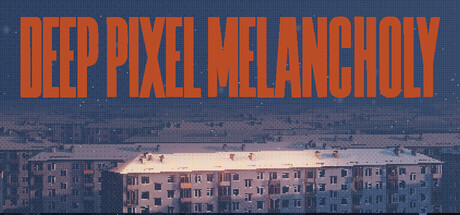
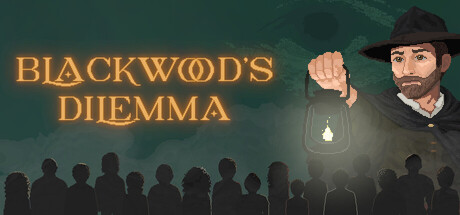
Creative Europe only funds narrative games. If yours is one, these three press kits on IndiePump.space show how other studios describe a story-driven game in a line or two.
Story-driven games on IndiePump.space

 Demo available
How IndiePump can help with funding
Our funding service helps you pick the schemes that fit your studio and write the marketing and distribution part of the application, which Creative Europe makes a mandatory work package. If you are weighing a grant against a campaign or a publisher, talk to us.

For developers
Put your game in front of 300+ content creators
Every game on IndiePump.space gets a free press kit page where streamers and writers request review keys, and you decide who gets one.

Follow IndiePump